
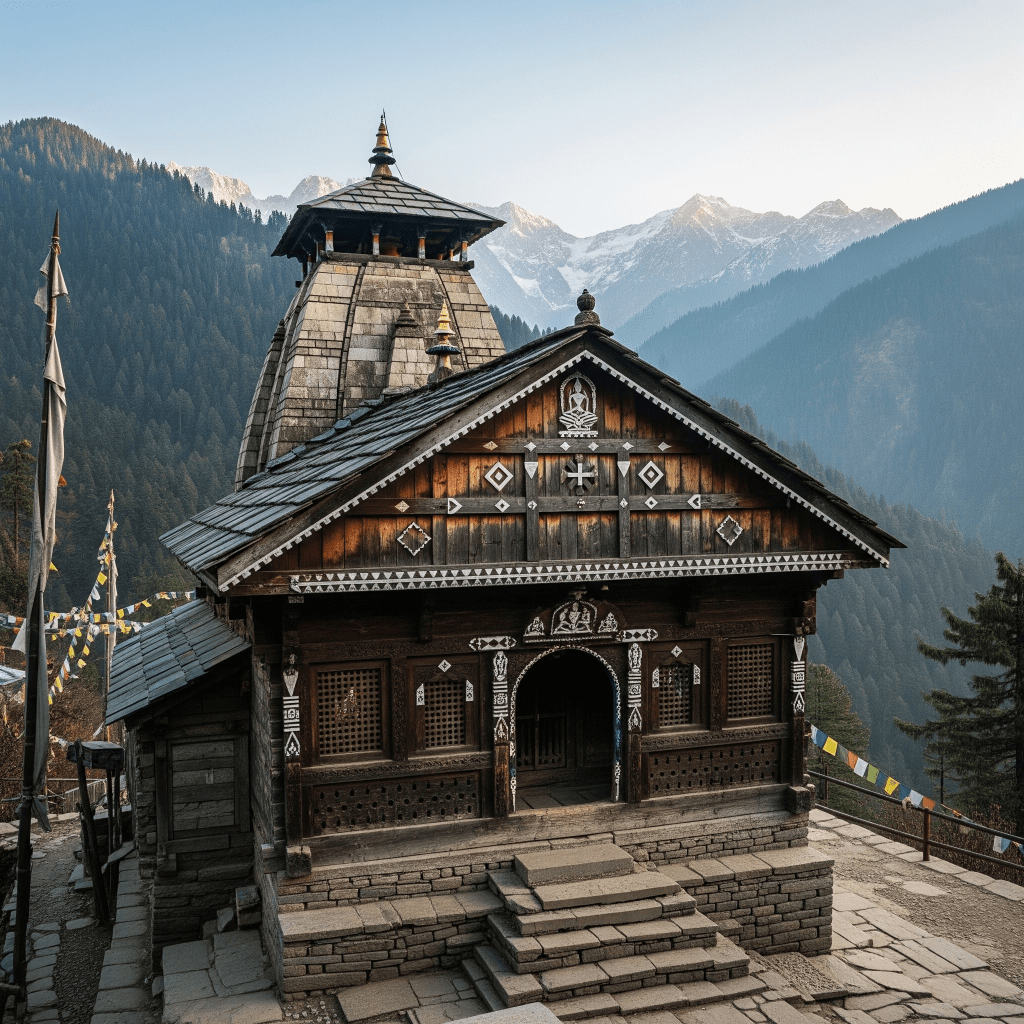
If you ever needed proof that the Mahabharata isn’t just a story but a living, breathing history, you need to travel only a few hours from Chakrata. Here, the earth itself seems to remember the Pandavas. As we stood on the rugged cliffs overlooking the Yamuna, a Jaunsari women pointed toward the horizon – to a place where a “House of Lac” once stood and where the ground still refuses to be disturbed.
Lakshagrah: The Site Where Gods Emerge
Our first stop was the legendary site of Lakshagrah (the Palace of Lac). According to the epic, this was the architectural trap set by Duryodhana to burn the Pandavas alive. Standing on the mounds today, you can almost feel the heat of that ancient conspiracy.
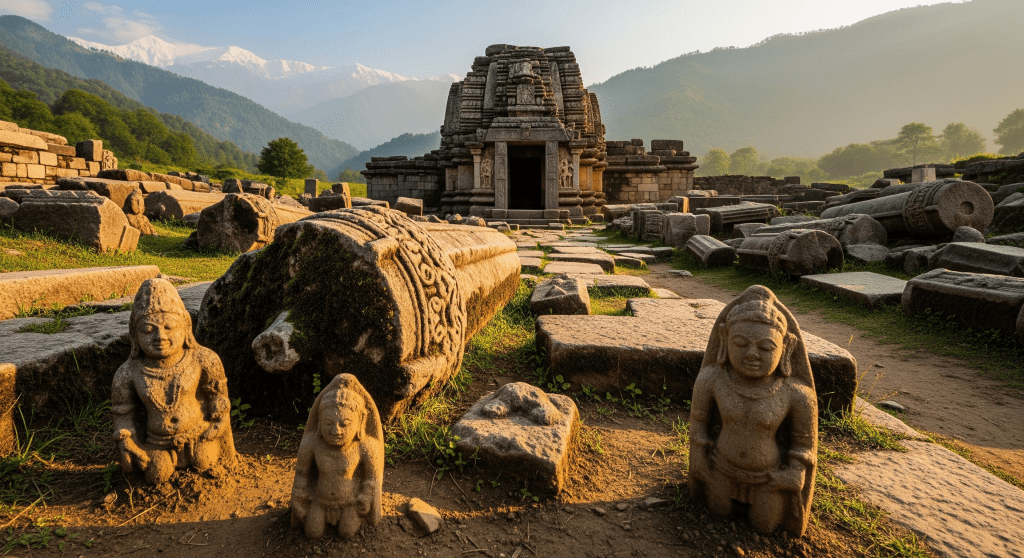
But there is a modern mystery here that keeps even the bravest archaeologists on their toes. In Lakshagrah, no one is allowed to dig the land. Local tradition and repeated experiences have taught the villagers a profound lesson: this soil belongs to the Mahasu Devta and the ancients.
Whenever the earth has been scratched or a foundation attempted, the ground has yielded not just clay, but ancient Shiv Lingas and idols of gods. It is as if the very palace that was meant to be a tomb transformed into a temple beneath the surface. For the people of Ashtaad, the message is clear: the Pandavas’ escape wasn’t just luck, it was divine intervention that sanctified the very ground they walked upon.
Lakhamandal: The Temple of a Lakh Lingas
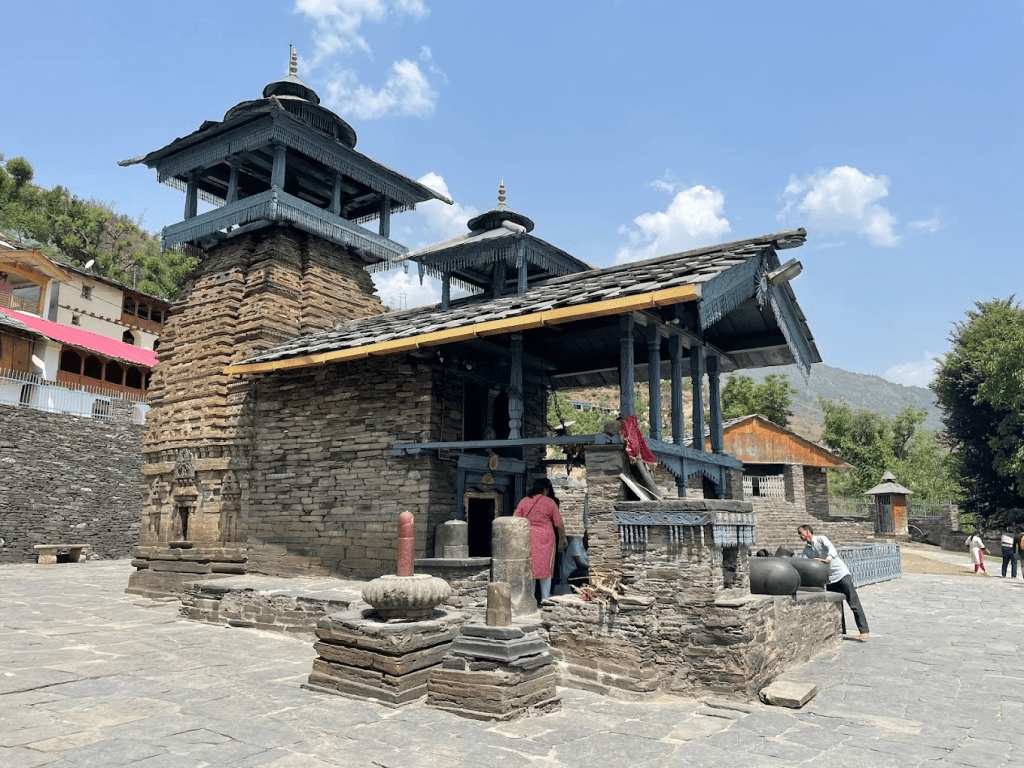
From the “Forbidden Soil” of Lakshagrah, we moved to the site of the stone: Lakhamandal. The name itself is a portmanteau of Lakha (Lakh/1,00,000) and Mandal (Zone). As we entered the temple complex, the sheer scale of the history hit us.
This isn’t just one temple but a sprawling archaeological marvel. Scattered across the grounds are hundreds of ancient stone Shiva Lingas and intricate carvings. The local belief is that at one point, there were so many temples here that one could not step anywhere without touching a piece of the divine.
The Graphite Mirror and the Twin Guardians
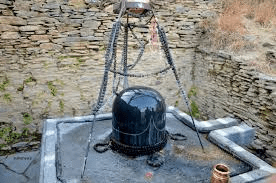
The centerpiece of Lakhamandal is the massive Graphite Shiva Linga. When water is poured over it, the stone shines like a dark mirror. Legend has it that if you look into the reflection with a pure heart, you can see your past lives – a chilling thought as you stand in a place that has seen thousands of years of human struggle.
Standing guard at the entrance are two towering stone statues, often identified as Jay and Vijay (the celestial gatekeepers). However, local Jaunsari tradition whispers a different story – that these are the figures of Arjuna and Bheem, standing eternal watch over the land that sheltered them during their exile.
The Cave of the Pandavas: Budher and Moila Top
To complete the “Epic Map,” we trekked up to Moila Top to see the Budher Caves. These are limestone formations that stretch deep into the mountain. we also saw the “stalactite pillars” that the villagers believe were the walking sticks of the brothers.
Walking through the dark, damp passages of Budher, you realize why the Pandavas chose this region. It is a natural fortress. The “Hidden Geography” of Jaunsar Bawar – with its caves, its narrow ridges, and its restricted access – was as much a character in the Mahabharata as the heroes themselves.
Why These Stones Still Speak
As we drove back toward Ashtaad, the sunset hitting the ancient spires of Lakhamandal, I realized that for the people here, these sites are the anchors of their identity. In a world of digital deepfakes and fleeting trends, the “Stone History” of Lakhamandal provides a sense of permanence.
Whether you are a skeptic or a believer, you cannot stand in the shadow of these ruins without feeling a shiver of the ancient. The fire of Lakshagrah may have gone out thousands of years ago, but the gods continue to emerge from its soil, reminding us that some stories are too powerful to stay buried.


Leave a Reply