
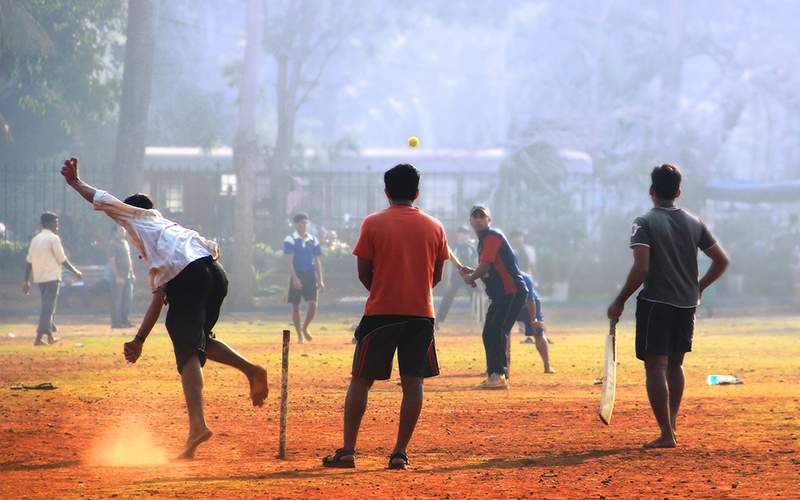
If there’s one place where the sound of cricket is louder than the roar of the crowd in a packed stadium, it’s the streets of Delhi. Gully Cricket in this city is not just a game, it’s a culture, an emotion, and in some cases, a war between two or more buildings.
Walk into any colony in Delhi in the evenings, and you’ll hear it before you see it, the sharp sound of a tennis ball hitting a makeshift bat, followed by some of the loudest appeals you’ve ever heard. No umpires, no third umpire, and no DRS, just raw emotion and instant decision-making, followed by some of the longest debates you’ve ever seen.
The beauty of Gully Cricket is in its rules, or the lack of it. Every street has its own rules. In some streets, “one tip one hand” is the only rule. In some, hitting the neighbor’s window results in an out and, in some cases, a lifetime ban if the uncle gets involved. The boundaries are imaginary, set by a scooter, a drain, or the infamous “gupta ji ki car.”
A good straight drive will get you applause in a stadium, but here, it could cost you the game if it damages someone’s car.
Equipment? Now, this is something different. A good bat is a luxury item. Most games are played with bats that are taped together because they’re broken, or even with wooden planks. The ball? A worn-out tennis ball, often with electrical tape put around it for added swing,Delhi’s version of reverse swing, discovered long before it was popularized in international stadiums.
What really sets gully cricket in Delhi apart, though, is the people playing it. There’s always a star in each lane, the guy who says, “Bas chance nahi mila, main toh India mein khel sakta tha.”
There’s always a fast bowler who runs in as if he’s playing in the Arun Jaitley Stadium, delivering a full toss to the batter. There’s always a young bloke who has to field in the ‘danger zone’, usually near the drain, because he owns the bat.
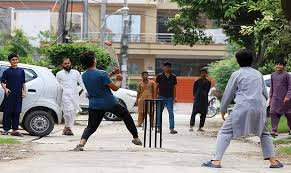
And then, of course, there are the stoppages in play. A passing car can stop play in an instant. Someone’s mom calling from the balcony can retire a player mid-game.
But despite all this chaos, or maybe because of it, gully cricket is teaching kids lessons that no academy can. It is teaching them to be flexible and to play shots in confined spaces. It is teaching them to adapt to different types of pitches and to handle pressure without any protective gear. It is teaching them to negotiate and resolve conflicts and most importantly, the spirit of the game.
Then there is the community side of things that cannot be found anywhere else. Children of different backgrounds come together and form their own teams and rivalries. The same boys who fight over a run-out will have cold drinks together in no time and laugh as if nothing is wrong.
In a city that is always on the go and never stops to look back, gully cricket is providing it with a pause and a slice of pure joy in the midst of all this chaos. It does not need stadiums or equipment. It does not need anything except a place to play, a bat, a ball, and passionate players.
This is the madness of gully cricket in Delhi: unpredictable, loud, chaotic, and unforgettable.


Leave a Reply