
If you want to truly understand a culture, don’t look at their monuments, look at their plates. During my 72 hours in Ashtaad, the kitchen in Mama Ji’s house became my classroom. Between the heat of the Bukhari and the rhythm of the stone grinder, I discovered that Jaunsari cuisine is a masterclass in “survival with soul.”
Pahadi Loon: The ‘Flavored Gold’ of the Hills
The most striking discovery wasn’t a main course, but a condiment: Pahadi Loon (flavored salt). In the city, salt is just a white powder. In Ashtaad, it is a vibrant, aromatic art form.
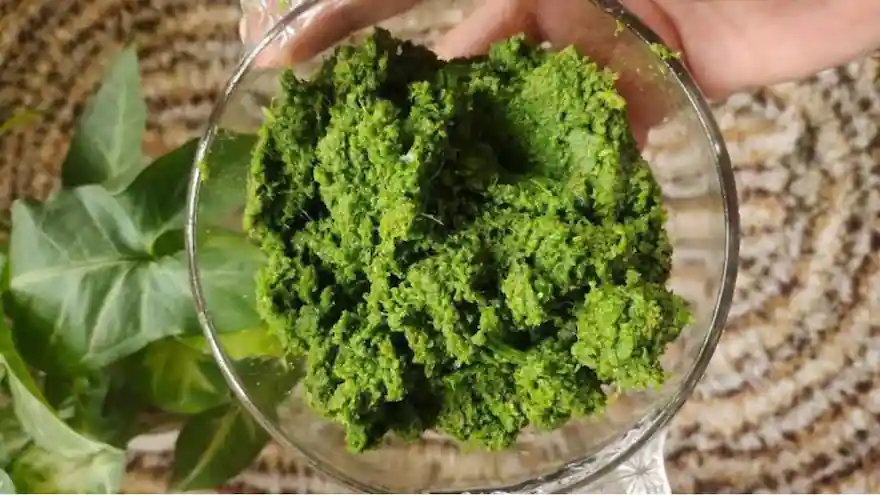
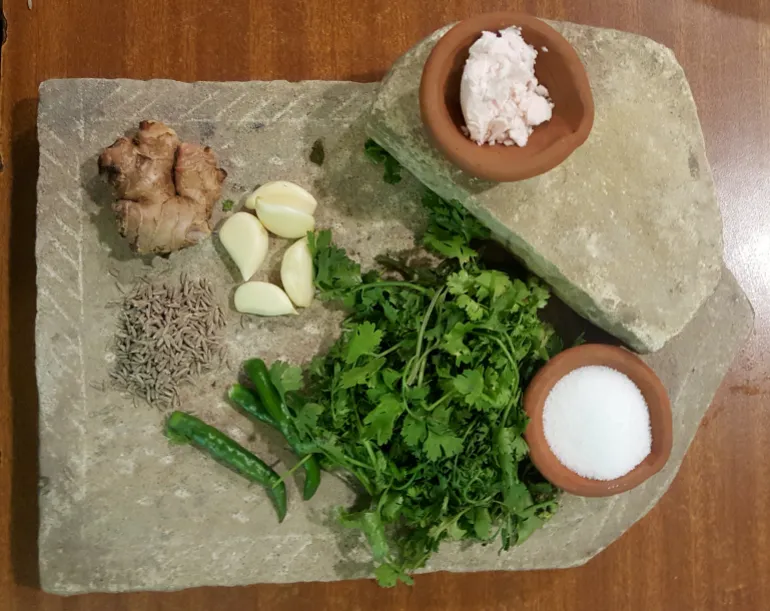
Nitin Sir showed us how the women of the village gather fresh coriander, ginger, garlic, and fiery green chilies, grinding them into rock salt on a traditional stone slab (Sil-Batta). The result is a damp, colorful “Hara Namak” (Green Salt) or “Lal Namak” (Red Salt) that carries the very scent of the Himalayan morning.
But there is a modern, empowering twist to this ancient tradition. The women of Ashtaad and neighboring villages have realized that their daily salt is a luxury for the rest of the world. They have formed their own Self-Help Groups and Cooperatives, transforming a kitchen chore into a flourishing micro-economy. By packaging and selling this authentic Pahadi Loon to tourists and city markets, they are creating a financial safety net that belongs entirely to them. It is “Women’s Empowerment” you can taste.
Siddu: The Mountain Dumpling
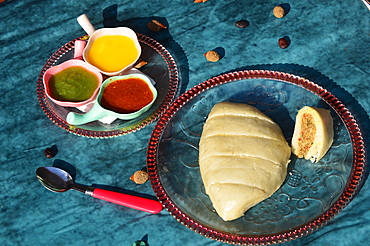
You haven’t lived until you’ve eaten a Siddu fresh off the steamer in a wooden Jaunsari home. Siddu is a local bread made from fermented wheat flour, stuffed with a rich paste of walnuts, poppy seeds, and local spices. Because of the high altitude and cold, the dough takes hours to rise. It is then steamed and served swimming in a bowl of liquid Desi Ghee.
In the freezing February nights, one Siddu feels like a warm hug for your stomach. It is dense, nutritious, and designed to provide the energy needed to climb the steep terraces of the Bawar region.
The Resilience of Red Rice and Mandua
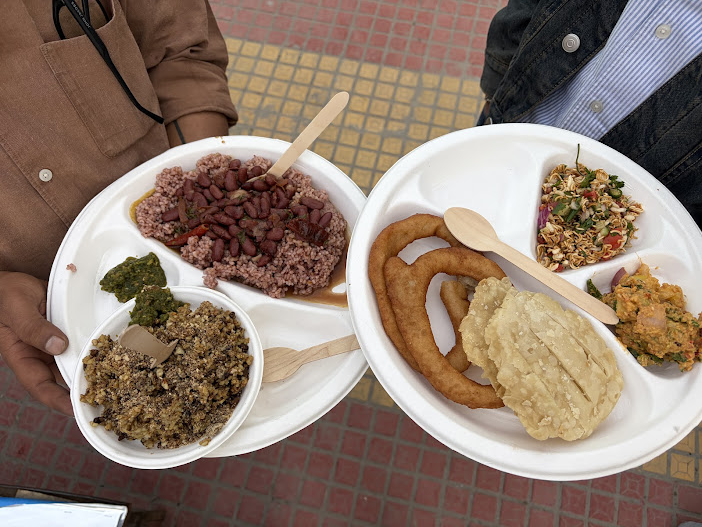
As we discussed in the “Snow Drought” blog, the changing climate is a constant shadow. However, the traditional crops of Red Rice and Mandua (Finger Millet) are the village’s secret weapons.
These aren’t “trendy superfoods” here, they are staples. Mandua is incredibly hardy and requires very little water, making it the perfect crop for the unpredictable weather of 2026. Whether it’s turned into a dark, earthy Roti or a warm porridge, it is what has kept the Jaunsari people strong for centuries.
The “Common Hearth” Philosophy
One thing that struck me was the communal nature of eating. In Ashtaad, a meal is rarely a private affair. If a neighbor drops by while the Dal is on the fire, a plate is automatically set for them. There is no “invitation” needed – the hospitality is as natural as the gravity that pulls the Yamuna downstream.
Nitin Sir explained that this stems from the Pandava heritage the idea of sharing everything equally. Even in times of scarcity, the “common hearth” ensures that no one in the Khat (social unit) goes to bed hungry.
The Takeaway for the Traveler
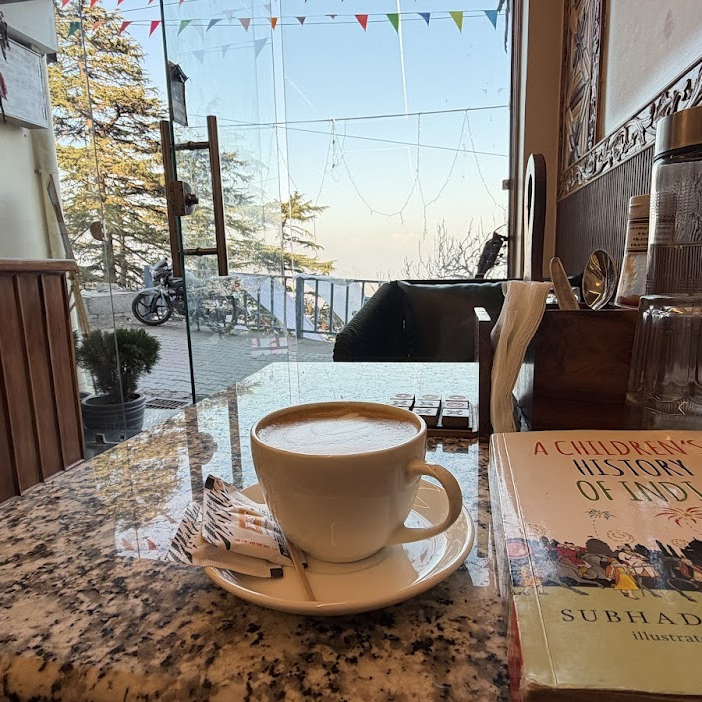
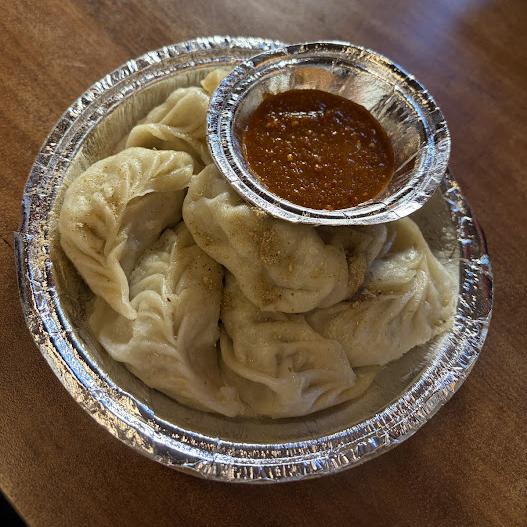
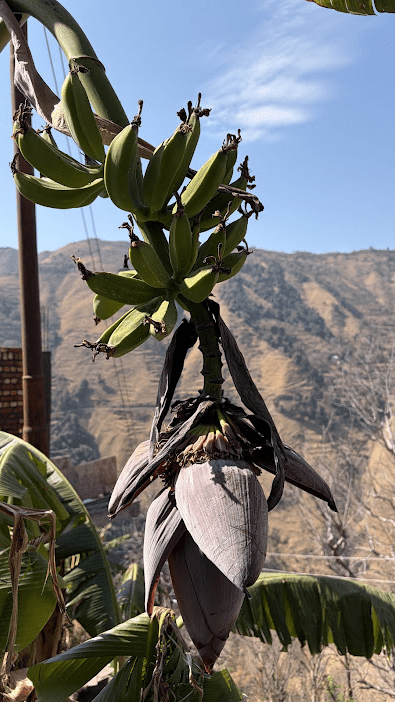
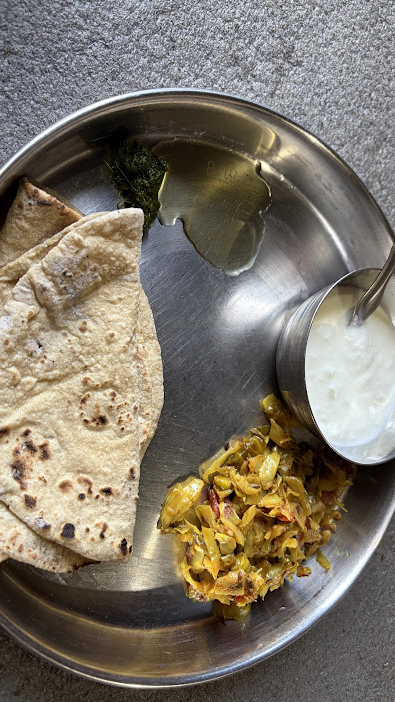
When you visit Jaunsar Bawar, don’t look for cafes or fine dining. Look for the smoke rising from a wooden rooftop. The best meal you will ever have is a simple plate of Red Rice topped with soft Rajma Curry, a dollop of Ghee, and a pinch of that incredible Pahadi Loon, shared with a family that treats you like a long-lost nephew.
The food here tells the story of a people who refuse to be defeated by the terrain or the climate. It is a cuisine built on salt, sweat, and a fierce sense of community.


Leave a Reply