
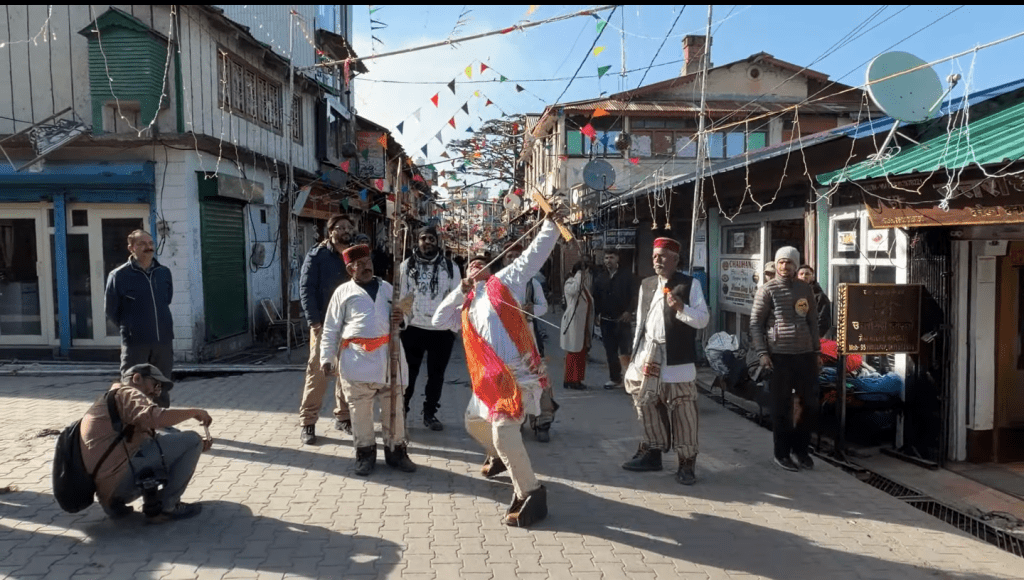
In most parts of the world, the Mahabharata is a book found on a dusty shelf or a series watched on a screen. But in India, within the high ridges of Jaunsar Bawar, the Great War never really ended. During our stay, people explained something that sounds like historical fiction but is a daily reality here: the people of this region don’t just read the epic; they are the characters.
The Great Divide: Jaunsar vs. Bawar
One of the most unique aspects of this region is the ancestral “split” between the two main belts.
- The Jaunsaris: Traditionally, the people of the Jaunsar region (including villages like Ashtaad) claim direct lineage from the Pandavas.
- The Bawaris: Those living deeper in the Bawar belt identify as the descendants of the Kauravas.
To a city dweller, this might seem like a fun trivia point. But in the villages, this defines everything – from which folk songs are sung to how people perceive their own history. While the rest of India views the Kauravas as the “villains,” the people of Bawar revere them as their noble ancestors. There is no “good vs. evil” here; there is only “us and them,” and a shared pride in a legendary past.
The Architecture of Worship: Duryodhana’s Temple
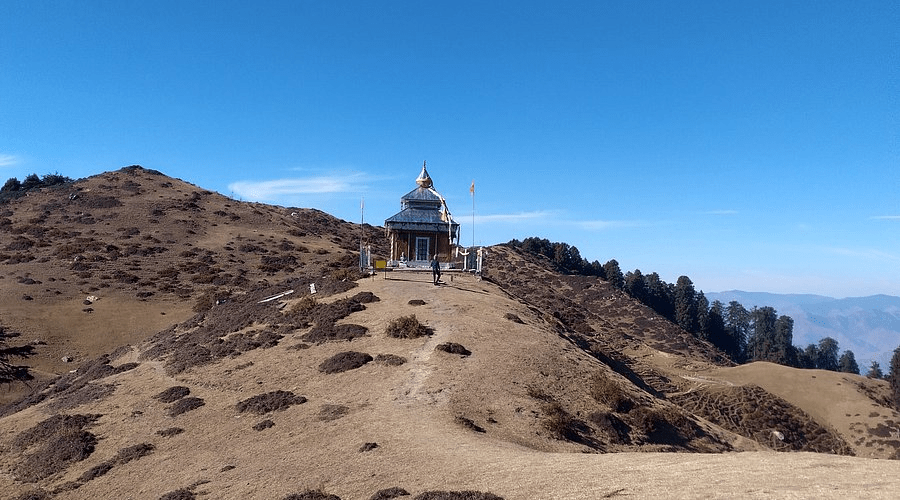
Perhaps the most “shocking” fact for someone from the plains is the existence of temples dedicated to Duryodhana (often worshipped here as Someshwar Devta). While the rest of the country sees them as “villains,” the people here offer prayers to them.
Nitin Sir pointed out that this isn’t about worshipping “evil” – it’s about a culture that stayed loyal to its roots regardless of the outcome of a war fought thousands of years ago. It’s a perspective on history that you won’t find in any textbook.
Traces of the Exile: The Moila Top & Budher Caves
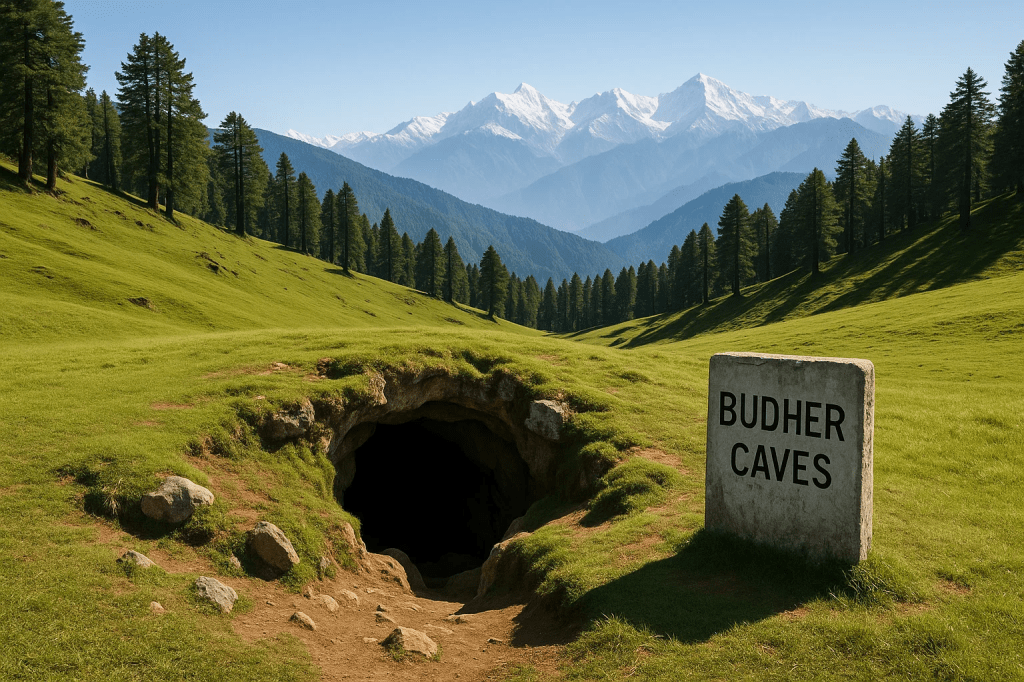
The landscape itself is scarred by the epic. Near Chakrata, there is a place called Moila Top, home to the Budher Caves. Local legend says these limestone caves were built by Miayan (Bheem) during the Pandavas’ Agyatvas (period of hiding).
Walking through these meadows, the villagers will point out specific rock formations that they claim were used by the brothers for cooking or resting. Whether or not carbon dating would agree is irrelevant, for the people of Ashtaad these aren’t just rocks – they are family heirlooms.
The Pandava Nritya: A Dance of Possession
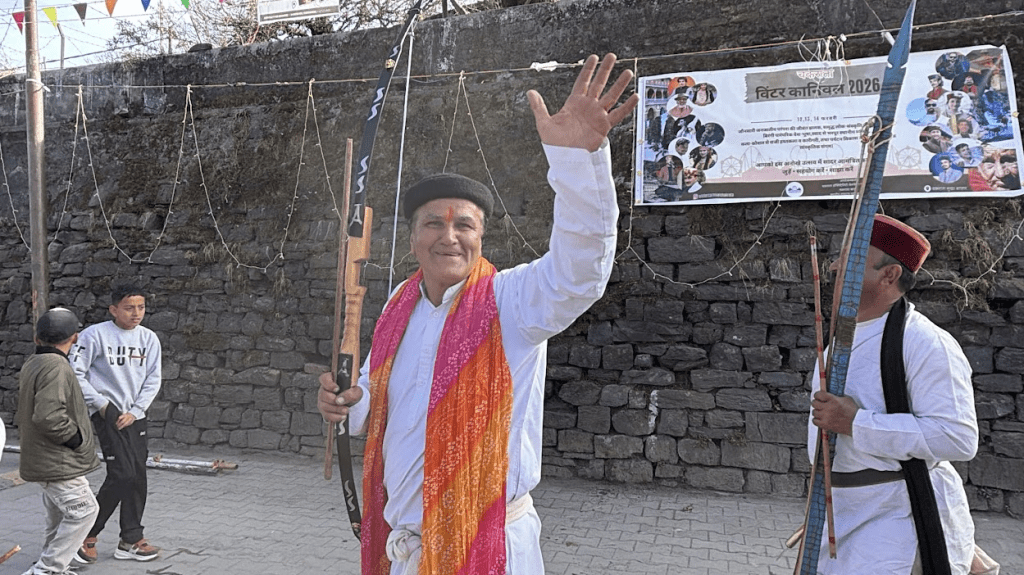
During the winter months, you might witness the Pandava Nritya. This isn’t just a “folk dance” for tourists. It is a ritualistic performance where the dancers are believed to be “possessed” by the spirits of the five brothers.
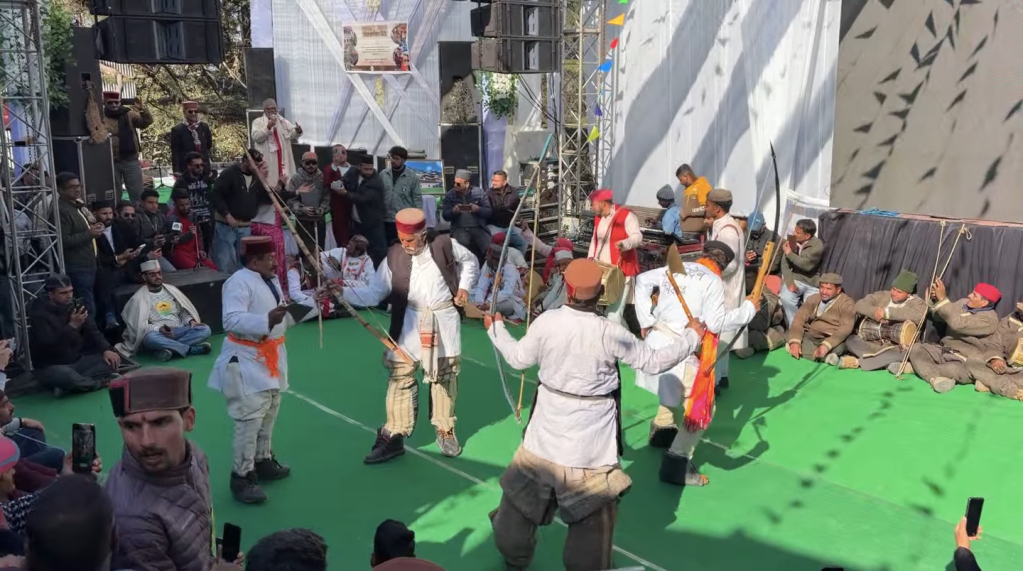
I watched as the rhythm of the drums shifted, and the energy in the room transformed. People who were just chatting a moment ago suddenly moved with a strength and intensity that felt otherworldly. It’s a visceral reminder that in Jaunsar Bawar, the line between the “mythological past” and the “living present” is paper-thin.
Why This Matters
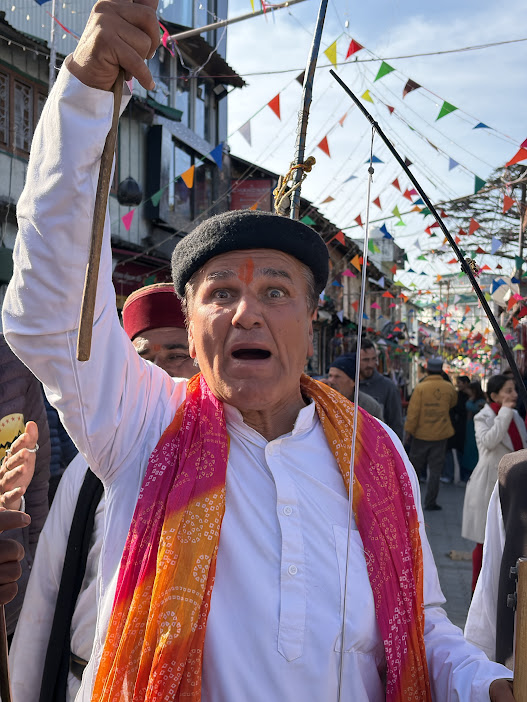
Understanding this “Epic DNA” changed how I saw the villagers. They aren’t just “mountain people”, they are the self-appointed guardians of a 5,000-year-old story. It explains their fierce loyalty, their unique justice system, and even their resilience in the face of the 2026 drought. If your ancestors survived the Kurukshetra war, you believe you can survive anything.
 Journeys & Jerseys
Leave a comment