
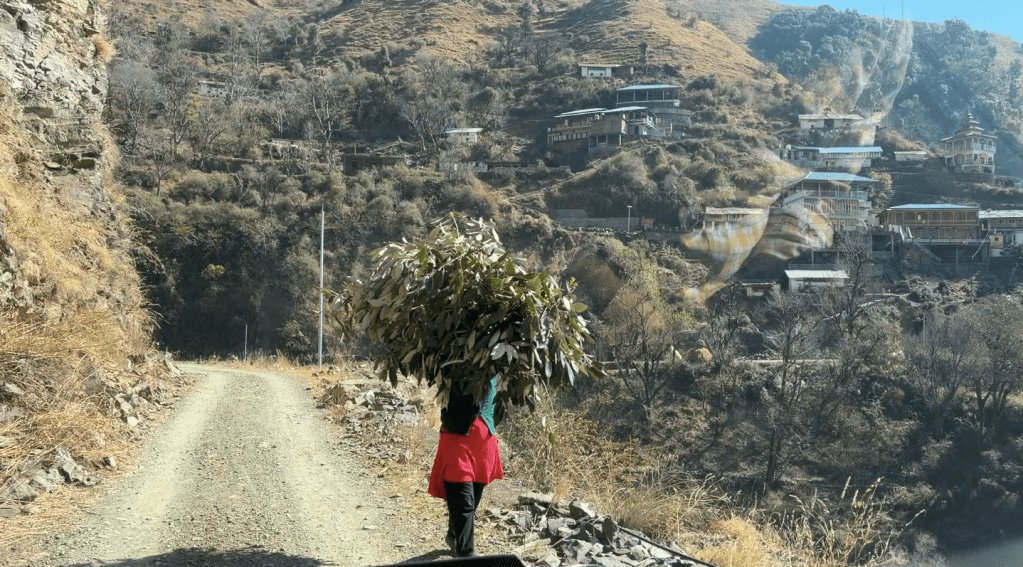
If you walk into a traditional home in Jaunsar Bawar, you might see the men sitting in the Chauk (courtyard) discussing the weather or politics. But look closer, and you’ll realize the gears of the entire society are turned by the women. During our 72 hours in Ashtaad, our mentor Nitin Sir shared stories that dismantled every urban stereotype I had ever heard about rural gender roles.
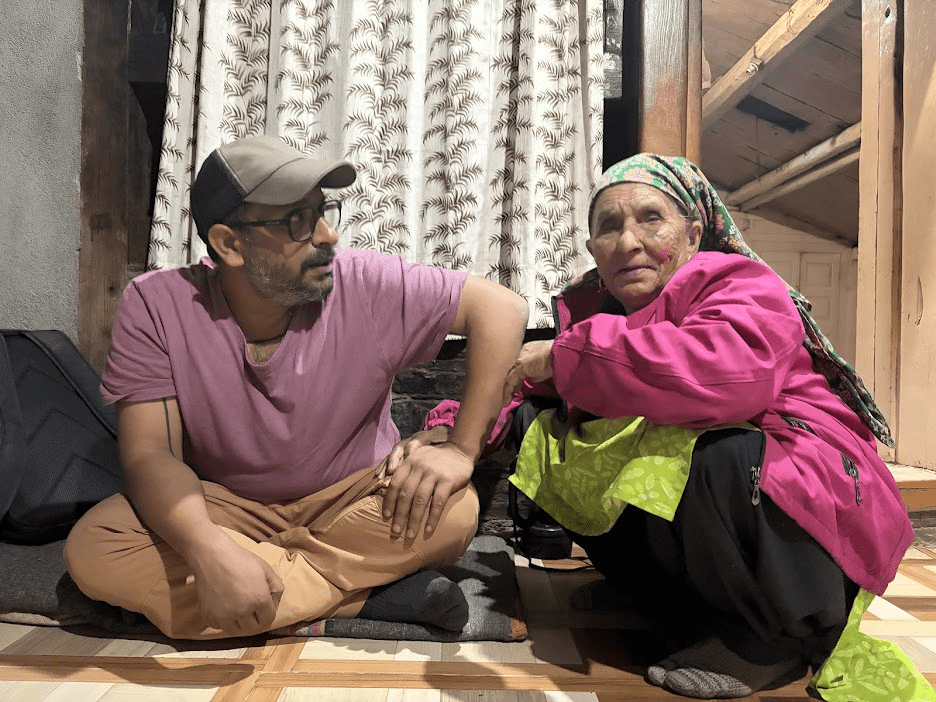
Through his eyes, we didn’t just see a village; we saw a civilization where the feminine is not just worshipped in temples, but respected in the kitchen, the fields, and the law.
A Tale of Two Villages: Chatou and Ashtaad
Nitin Sir’s perspective was unique because it was anchored in two distinct worlds. He spoke of his father’s village, Chatou, and his mother’s village, Ashtaad. While every village in Jaunsar Bawar has its own vibe, the common thread is the undisputed importance of the daughter and the wife.
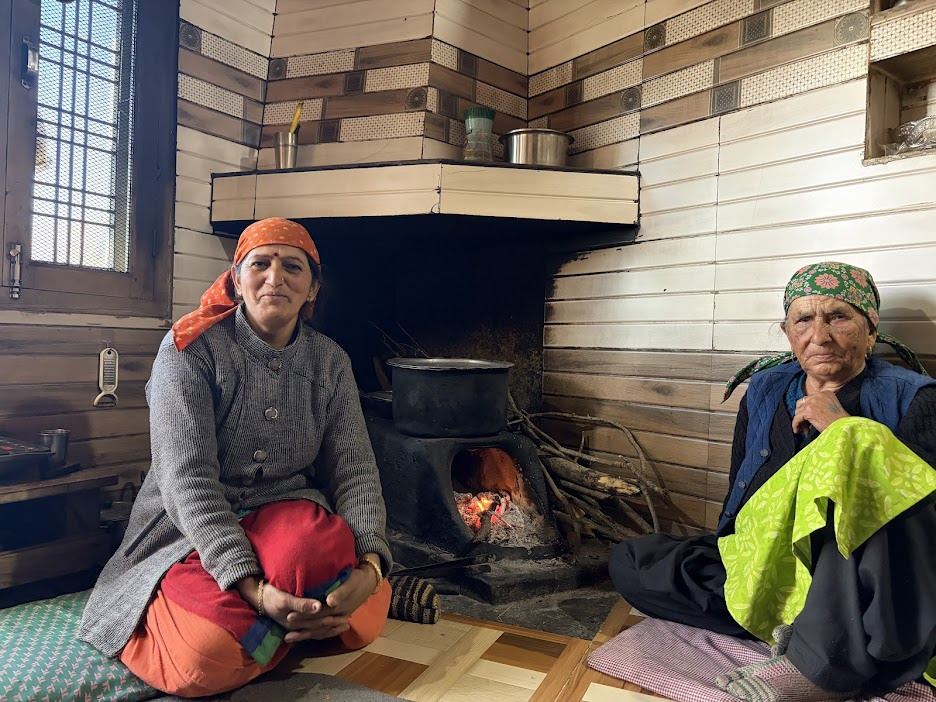
In Chatou, as in Ashtaad, the woman is the Griha-Lakshmi in a very literal, economic sense. She is the manager of the seed-banks, the decision-maker for the livestock, and the primary laborer in the terraces. But it goes beyond labor. Nitin Sir explained that in Jaunsar, a woman is never considered “paraya dhan” (someone else’s wealth). Even after marriage, her connection to her father’s house (Mait) remains a source of immense social power.
The Wedding: Where the Bride is Queen
A Jaunsari wedding is a masterclass in gender respect. Unlike many parts of the plains where the bride’s family is often burdened by expectations, the traditions here flip the script.
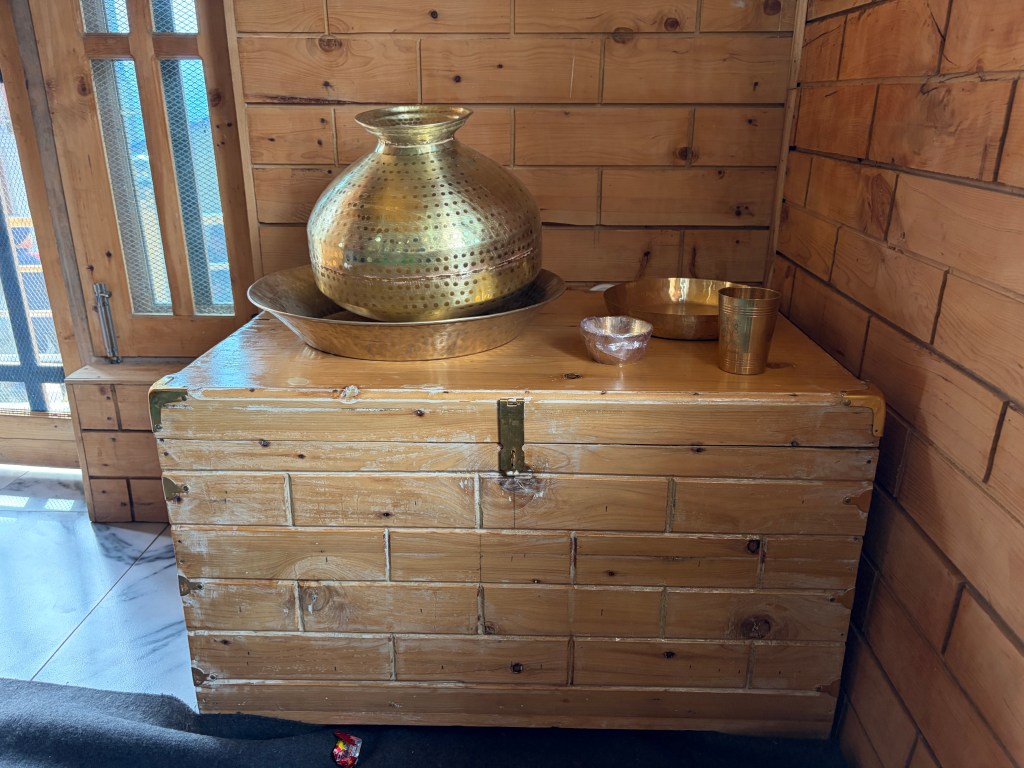
One of the most striking things Nitin Sir highlighted was the lack of a dowry system in its conventional, oppressive form. In fact, in ancient Jaunsari tradition, it was the groom’s side that often had to prove their worth. During the wedding, the bride doesn’t just leave her home in tears; she enters her new home as a partner with clearly defined rights. The women is also given 1 set of utensils with just 1 plate, 1 spoon, 1 glass and other items in a wooden box that would be her own in a new home and not make her dependent on the others.
The festivities – the vibrant dances and the traditional songs – are all centered on her transition not as a subordinate, but as a new pillar for the household.
The ‘Reet’ and the Right to Choose
We cannot talk about the women of Jaunsar without mentioning Reet. To an outsider, the concept of Reet (customary divorce and remarriage) is often sensationalized. But Nitin Sir explained the “Human Rights” logic behind it: A woman should never be forced to stay in a marriage where she is unhappy. Also, although not prevalent in current times, the villagers do tell stories about ancestral practice of polygamy where 1 women would have multiple husbands within the same family (1 women married to 3-5 brothers). The kids would call each husband – father, even though they might be termed as uncle in other parts of the country.
In Jaunsar Bawar, if a woman is incompatible with her husband or faces mistreatment, she has the socially sanctioned right to seek a divorce and remarry. The process involves a financial settlement (Reet), but the social outcome is profound: Zero Stigma. A remarried woman is treated with the same dignity as a first-time bride. In a country where divorce is often a social death sentence for women, the “primitive” villages of Chatou and Ashtaad are centuries ahead in terms of emotional and social agency.
Matriarchy in the Fields
As we walked the trails between the villages, we saw women carrying immense loads of fodder or fuel-wood with a grace that felt like a dance. But don’t mistake this for “hardship” alone, it is “ownership.”
Because the men often have to migrate for work (as we discussed in the previous blog), the women have become the de-facto heads of the village economy. They understand the soil, the ones who know which spring is drying up, and the ones who keep the oral traditions alive. When a woman in Ashtaad speaks, the family listens. When she decides on a crop, the village follows.
The “Ghumsu” and the Goddess
Nitin Sir reminded us that the respect for women is mirrored in their spiritual life. Many of the local deities are feminine, and the festivals – like Bissu or Dewaal – cannot happen without the active, leading participation of the women.
As I watched the sunset from Mama Ji’s balcony, I saw a group of women returning from the forest, their laughter echoing across the valley. It struck me that they didn’t look like people who needed “empowerment” from the city. They already had it. They had the land, they had the law, and they had a culture that saw them as equals.
In Jaunsar Bawar, the “Matriarch” isn’t a political term but it’s a way of life.
 Journeys & Jerseys
Leave a comment