
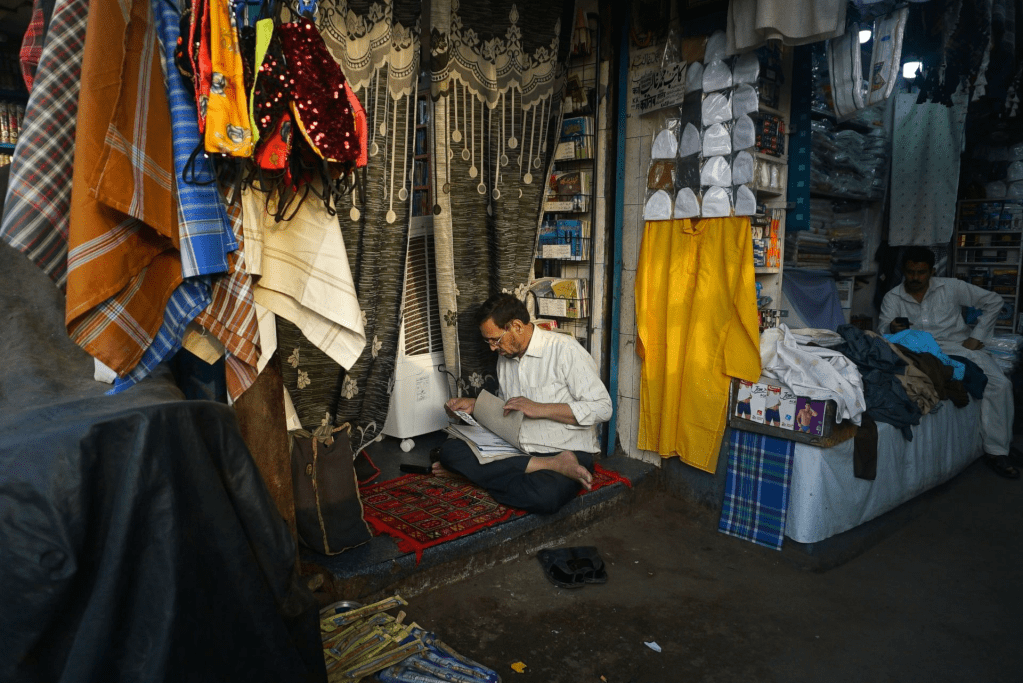
A Nameplate That Almost Disappears
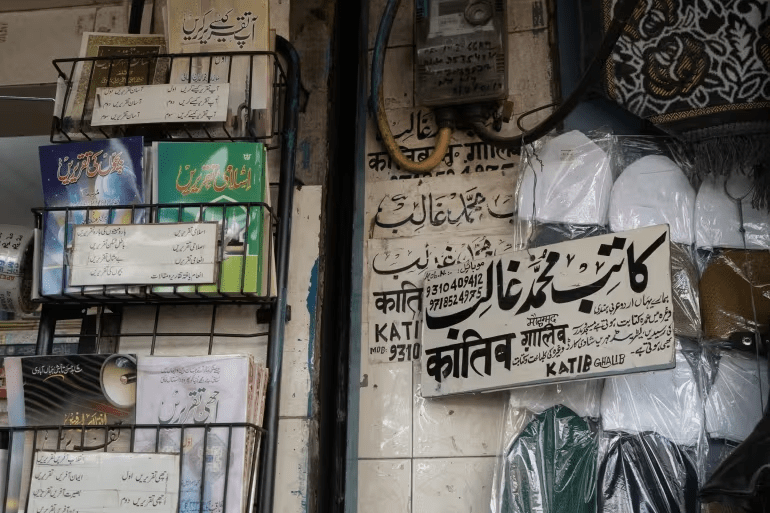
In Urdu Bazaar, large flex boards hang outside shops, loudly demanding attention. Every shop tries to stand out. But between them there is a small handwritten nameplate. It simply reads, “Katib Mohammad Ghalib.”
The board is so simple that if you are walking fast, you might not even notice it. Sometimes a few men carrying files walk past in a hurry and ask nearby shopkeepers, “Where can we find the katib?” Everyone in the market knows. He is the only one left.
A Small Space, A Strong Identity
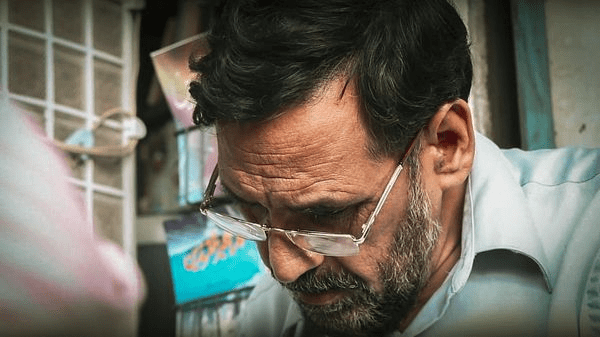
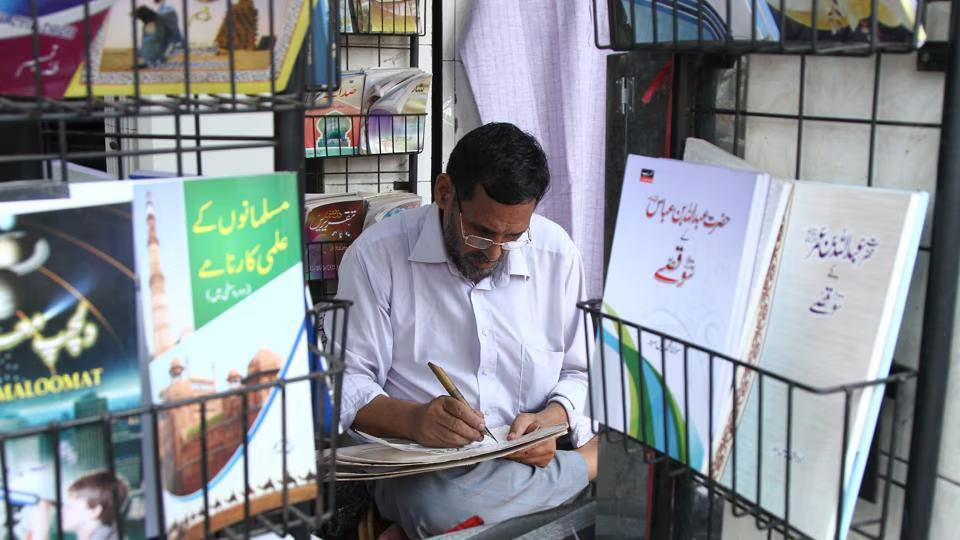
His workspace is very simple. Not a proper Setup. Just a small makeshift corner. A bag filled with papers lies beside him. A small metal box holds his calligraphy tools. And there he sits wearing half-rimmed glasses, a half-grey beard quietly focused on his work.
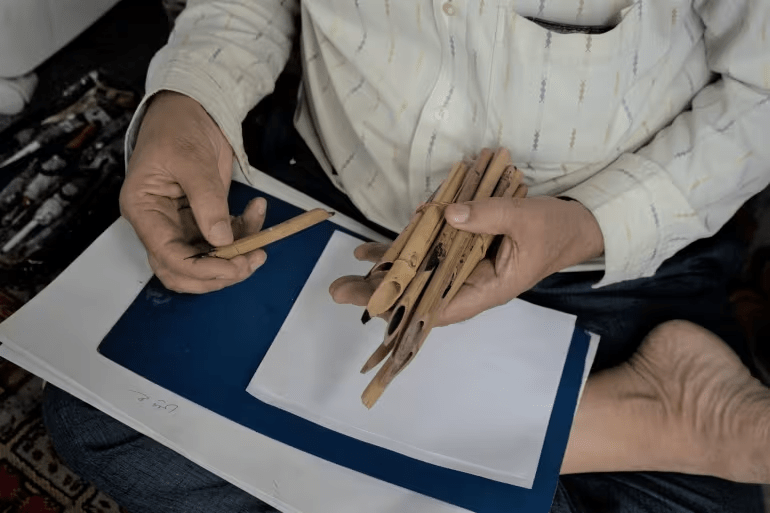
His thin wooden pen looks delicate but it follows his control completely. He writes each word slowly and carefully. First shaping it, then refining it. Sometimes using black acrylic, sometimes white. He does not stop until he feels the work is just right.
A Journey of 40 Years
Mohammad Ghalib has practiced this craft for about 40 years. There was a time when Urdu Bazaar had many calligraphers. Wedding cards, book covers and religious texts were written by hand. Calligraphy was not just writing; it was respected work.
Then technology changed everything. Computers took over. Printing became cheaper and faster. Gradually people began choosing digital fonts instead of handwritten art. One by one calligraphers disappeared from the market.
Today very few remain in those lanes. Ghalib is one of the last.
Ink That Still Lives
Sometimes he himself wonders if this art might disappear. Work is not regular. The market has changed. It is not easy to survive in this profession anymore.
But still every day he sits down, picks up his pen, and writes.
He once said, “This art is still alive because we had learned it in the past.”
The sentence sounds simple, but it carries meaning. As long as someone has learned it and continues to practice it, the art does not completely die.
Stone and Ink
Jama Masjid stands nearby, preserving history in stone.
And in his small corner, Ghalib preserves history in ink.
Outside, the world moves fast. Inside, one man still gives time to every single word.
Maybe tomorrow fewer people will come. Maybe the orders will decrease even more. But as long as his thin wooden pen continues to move across paper, “Ink in the Past” will not remain only in the past.
It will still exist in the present.
And maybe, quietly, wait for the future.


Leave a Reply