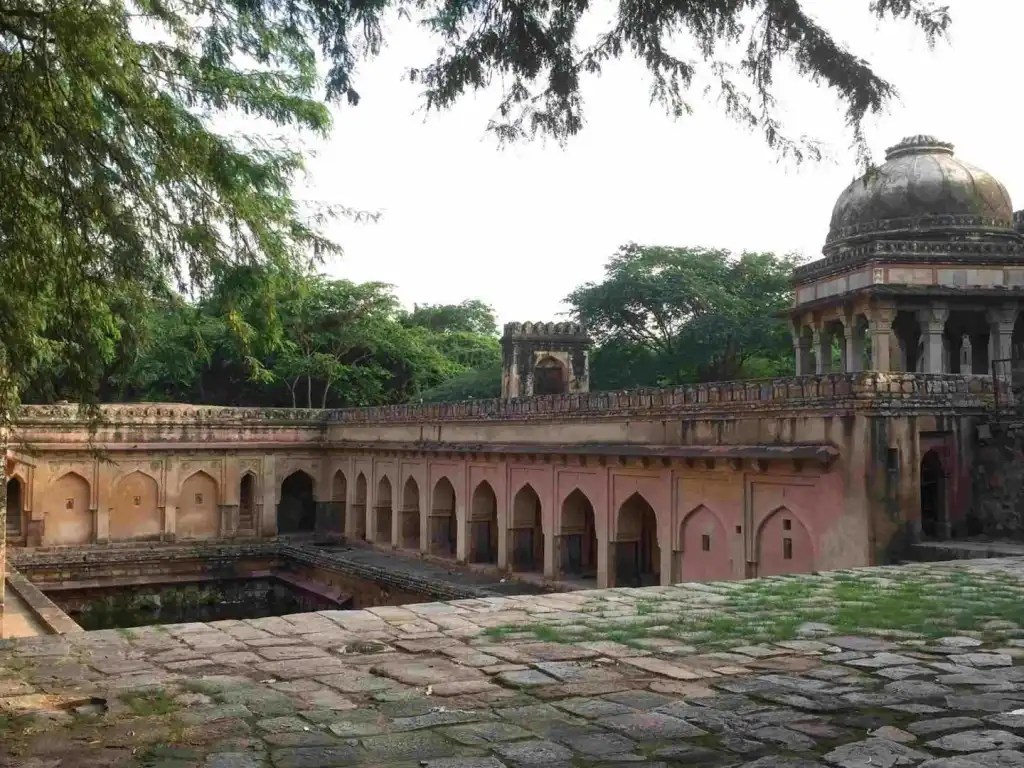
Delhi is a city of heights. We marvel at the soaring tip of the Qutub Minar, the massive ramparts of the Red Fort, and the glittering skylines of the modern hubs. But if you want to find the true soul of this city, you have to stop looking up.
You have to walk down.
Between the honking traffic, the grand tombs, and the stone monuments, Delhi hides water in the most unexpected places. There are staircases here that don’t lead to rooms, but to history itself. Have you ever stepped off a busy street and felt the air suddenly grow cool? Have you noticed the city’s roar fade into a soft hum?
Suddenly, you aren’t just looking at a monument—you are standing inside a different century. These are the Baolis of Delhi, once the lifeblood of the city, and they are waiting to tell you their stories.
Agrasen ki Baoli
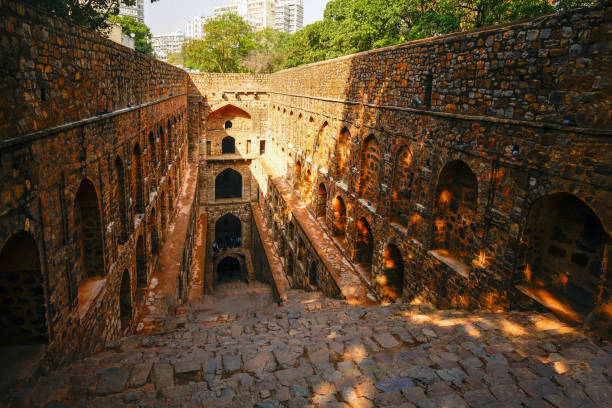
Located on Haiely Road near Connaught Place, Agrasen ki Baoli is among the best known stepwells in the capital. The monument is approximately sixty meters long and fifteen meters wide. As you begin to walk down its roughly one hundred and three stone steps, the modern city slowly fades away. What surrounds you instead is a multi-tiered arrangement of arched niches rising on either side, creating a powerful sense of symmetry and depth. The baoli is associated with Maharaja Agrasen and is often linked to the fourteenth century. The site has become an important heritage landmark and a memorable example of how water architecture
blended function with design. The experience of standing at the bottom remains
unforgettable. The air is cooler, pigeons circle above and the sound of your own footsteps becomes part of the monument.
Rajon ki Baoli
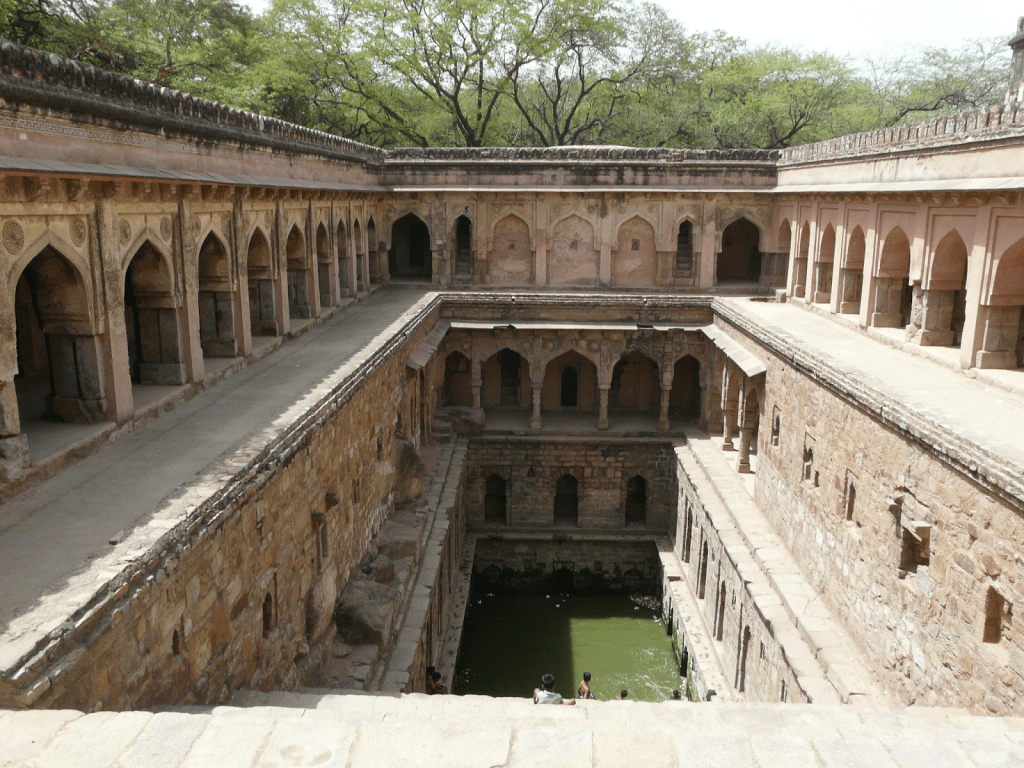
Walk into the green silence of Mehrauli Archaeological Park, Rajon ki Baoli offers a quieter but equally powerful encounter with history. Built in 1506 during the Lodi era by Daulat Khan, the stepwell came to be known as the “Baoli of the Masons.” The name itself carries an image of craftsmen who once worked on nearby monuments and used this place to draw water and rest after long hours of labor. The architecture reflects a fine Indo-Islamic style.
Elegant arches run along long covered corridors, often called dalans,, giving the structure both beauty and practicality. The baoli descends to a depth of around thirteen to fourteen meters, where the main tank measures approximately twenty-three by ten meters. Even today, while standing there one can almost imagine the sounds of tools, conversations and tired workers cooling themselves beside the water.
Gandhak ki Baoli
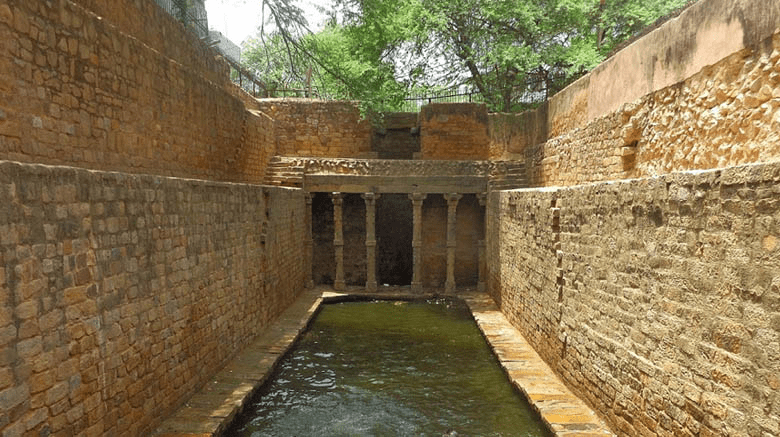
Gandhak ki Baoli is one of the oldest and deepest stepwells in Delhi. It is located in Mehrauli and shows the history of the Sultanate period. It is believed that this stepwell was built in the 13th century by Sultan Iltutmish, who ruled from 1211 to 1236. The place is also connected to the respected Sufi saint Qutbuddin Bakhtiar Kaki. The baoli provided regular water for him and his followers and it was also used for ritual bathing. The word gandhak translates to Sulphur and the water here was known for its strong, distinctive smell. Many people believed that the water of this baoli had healing powers. Built of rough stone and rubble masonry, the stepwell is said to be over eight hundred years old. It rises through five storeys and includes more than a hundred steps, often counted as around one hundred and five. In this place devotion and daily necessity merged into one.
Hazarat Nizamuddin ki Baoli
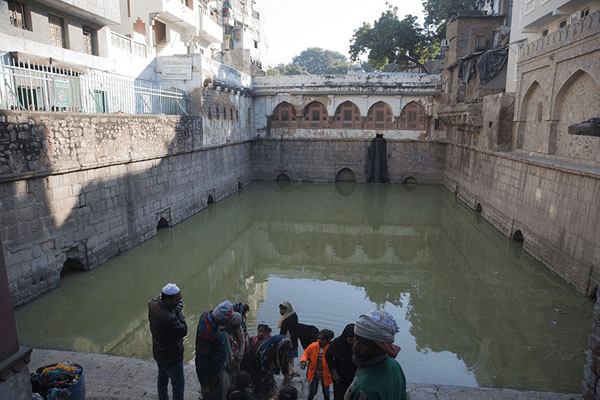
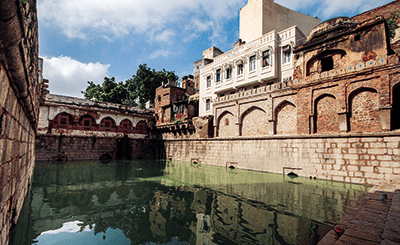
Very few stepwells in Delhi continue to function as living water bodies and this is one of them. Built around 1321–22, the baoli is now more than seven hundred years old. It was constructed under the guidance of the great Sufi saint Hazrat Nizamuddin Auliya and remains central to the spiritual life of the surrounding dargah complex. The baoli is rectangular in design and reaches a depth often described as around eighty feet with some accounts placing it even deeper.
What makes it remarkable is that it is still fed by natural underground springs. Pilgrims consider the water sacred and visitors can see how faith continues to flow here just as strongly as it must have centuries ago. It was restored by Aga Khan Trust for culture after a 2008 collapse. the site retains its power as a place of devotion and continuity.
Purana Qila Baoli
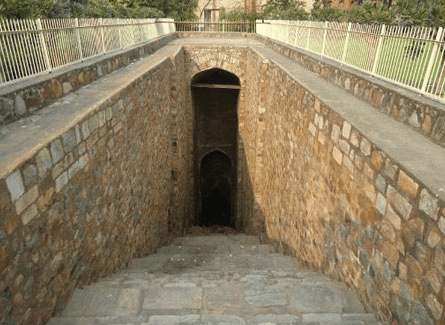
Purana Qila Baoli is located inside the historic Purana Qila complex. It reminds visitors of Delhi’s architectural and cultural history. The stepwell has around 89 steps and goes nearly 22 meters deep, showing how people in medieval times managed and stored water. Built mainly from sandstone, the baoli has arches and small niches along the walls which make it strong and visually attractive. Because it is covered the design helped keep the water safe from evaporation and also kept the inside cool, even during hot summers. As people walk down the steps, the noise from outside slowly becomes less and the place feels peaceful. In earlier times, the baoli was an important source of water for the residents of the fort and was closely connected to everyday life. It is also linked to the sixteenth-century construction phases during the time of Sher Shah Suri and Humayun and it stands near famous
monuments like Sher Mandal and the Qila-i-Kuhna mosque.
Firoz Shah Kotla Baoli
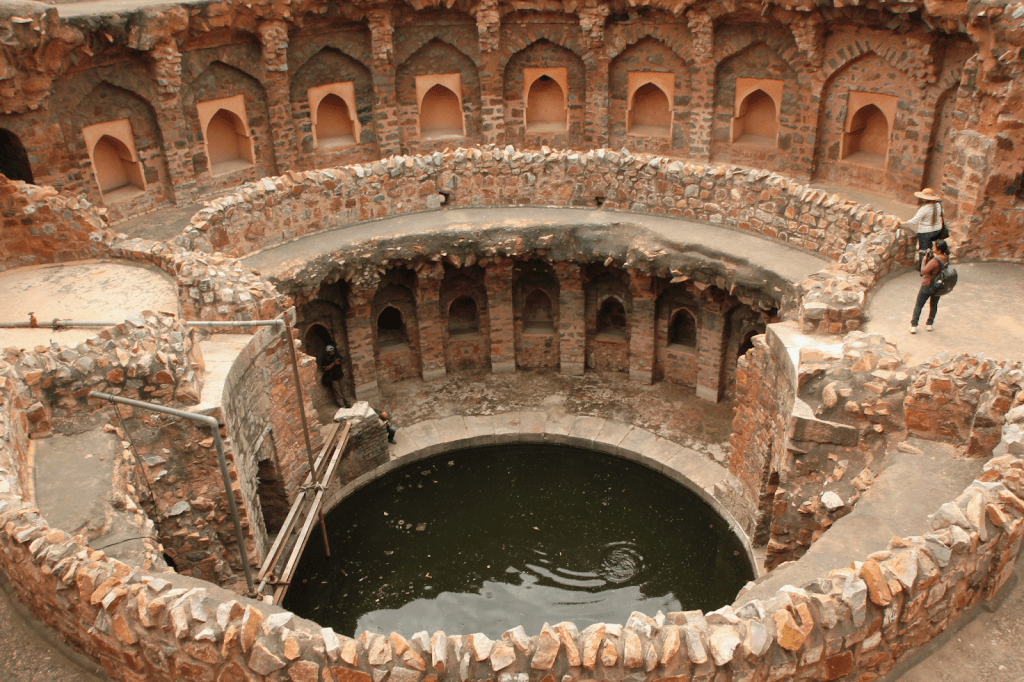
When Sultan Firoz Shah Tughlaq built his city in the fourteenth century he made sure that there was a proper system to store and supply water. This circular stepwell was an important part of the water network for the fort and the nearby gardens. A central tank was connected to a well, and around it were underground rooms that still make visitors stop and think about how the place might have looked in the past. The baoli had three to five levels so people could reach water even if the water level became low. The structure was built using rubble masonry and some parts were once covered by a roof which has now fallen. The baoli was not only about design and beauty it was mainly built to meet the daily needs of the people.
Anangtal Baoli
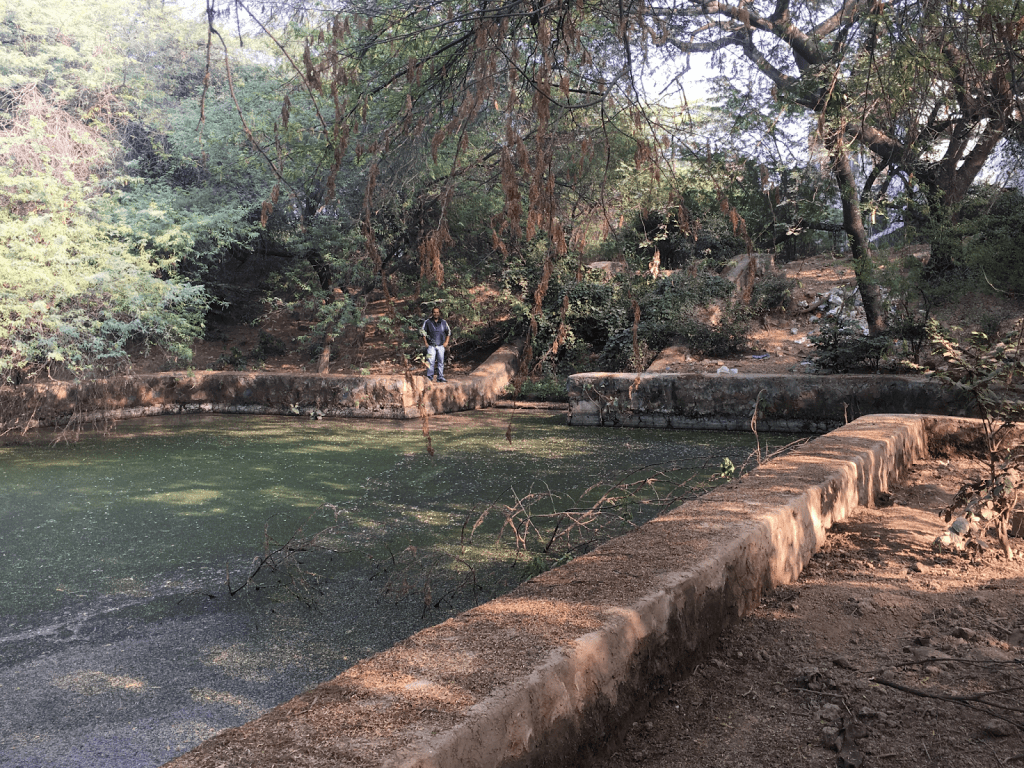
Hidden in the historic lanes of Mehrauli, Anang Tal Baoli quietly tells the story of Delhi’s earliest water wisdom. Recognised as one of the oldest surviving stepwells of the city, it is believed to have been built in the 10th century by King Anangpal II of the Tomar dynasty. What makes it special is its simplicity. Unlike the grand, multi-storey baolis people often imagine, this one is a single-stage reservoir built with strong stone masonry and steps that gently lead down to the water. Located near the Yogmaya Temple and not far from Lal Kot, the baoli was more than just architecture. It was a lifeline. Designed mainly for rainwater harvesting, it helped store water for people living in the fort and nearby settlements. In medieval times, such structures were also linked with royal charity and community welfare.
Loharheri Baoli
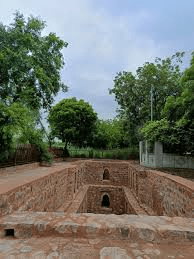
Loharheri Baoli is an old stepwell that tells us about Delhi’s past. It was built around the early sixteenth century during the Lodi period and was meant to serve the people living nearby. The name Loharheri is connected to lohars, or ironsmiths, who are said to have lived in this area. For them and others in the village, the baoli was an important place to get water and was closely connected to daily life. In terms of design, the baoli follows a U-shaped plan. It has about twenty-two steps going down. The structure is built in three levels which makes the place look deep and well planned. Along the sides there are arched niches that show the building style used at that time. Today, the well stands dry and non-functional.
Baolis teaches us something simple yet powerful. Civilization are not built only with palaces and mosques. They are built with wells, steps, storage and shared access. If you ever wish to understand Delhi, do not only look up… Walk down.

 Journeys & Jerseys
Leave a reply to IndiaNetzone Cancel reply